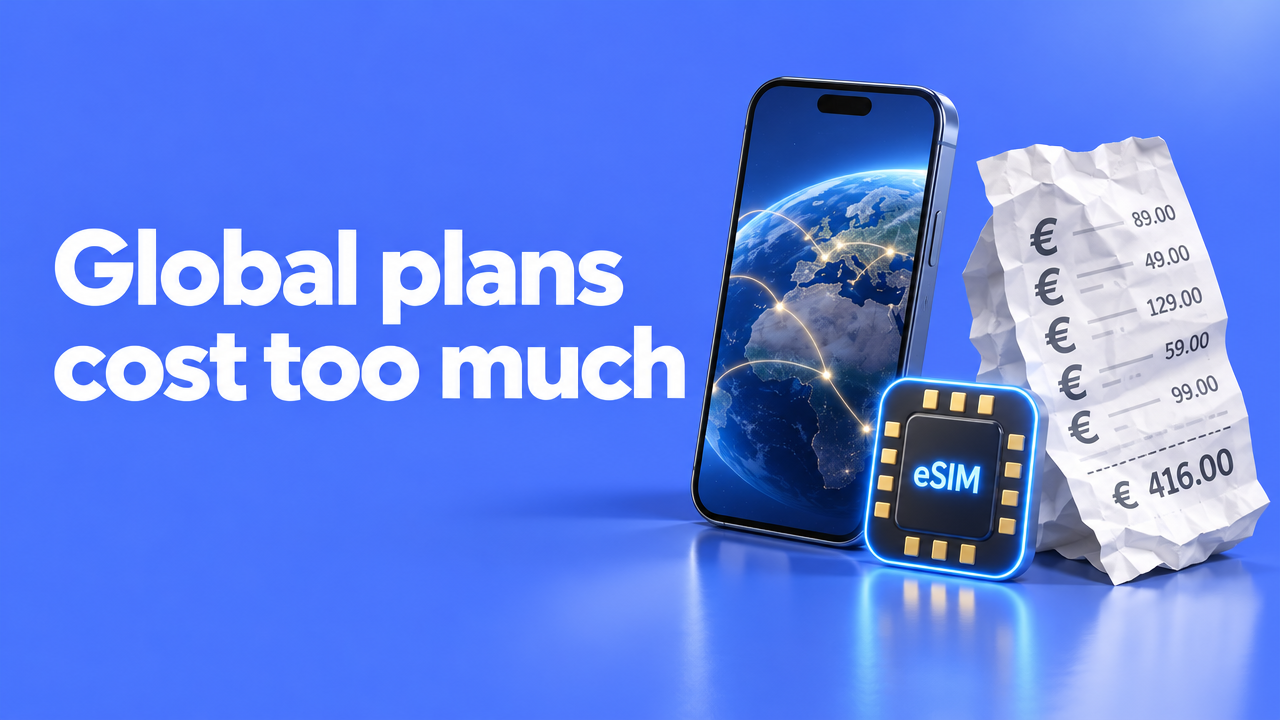
Paying for unlimited data but using 5 GB? You're not alone
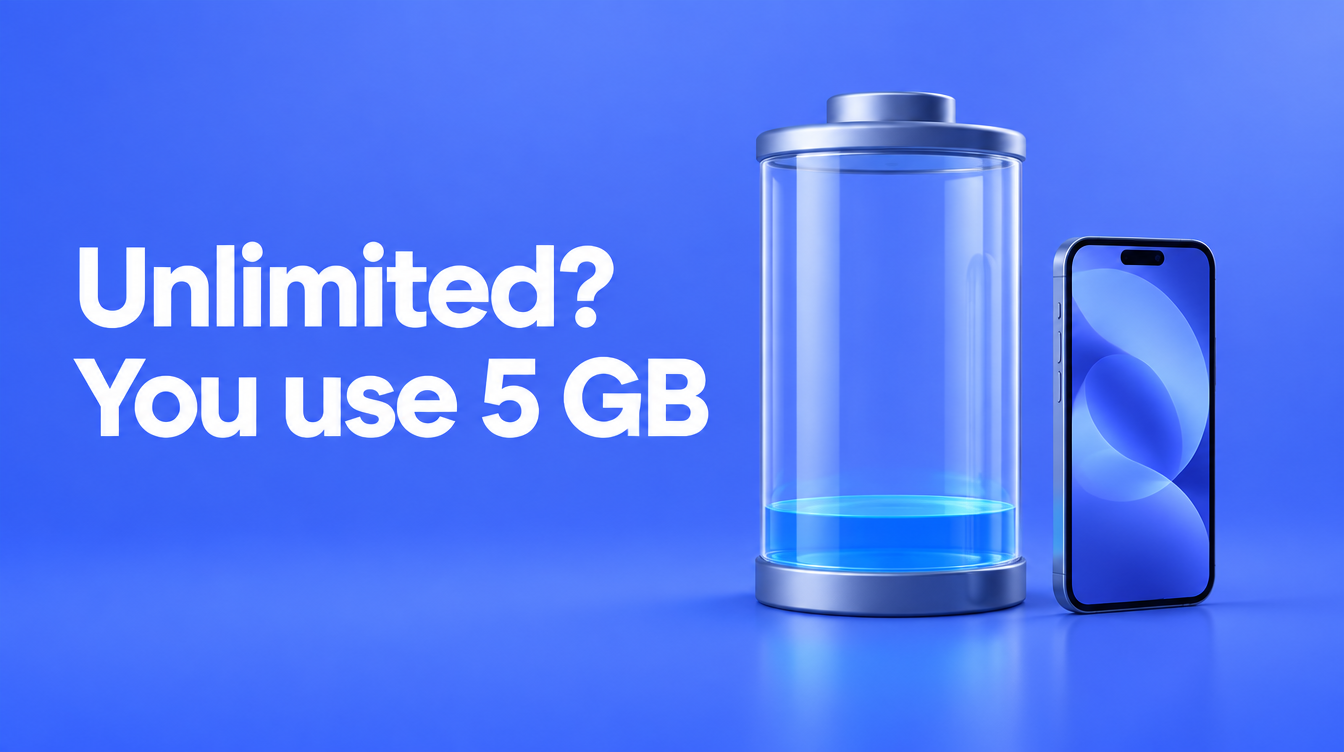
Short answer: most people pay for far more mobile data than they use. Even Laidi Ferruni, Super eSIM's founder, pays for an unlimited plan at home and most months doesn't go past 5 GB. If you travel, a small global eSIM plan plus a cheap line for your number is usually the smarter setup.
Why do people pay for unlimited?
Honestly? Habit.
Laidi put it simply: "I have an unlimited package in my country. It's very expensive. And most of the time I don't spend more than five gigs."
Think about your own day. Wi-Fi at home. Wi-Fi at the office. Wi-Fi in most cafés. Mobile data is for the in-between: maps, messages, a call in a taxi, checking email before a meeting.
That's not unlimited usage. That's a small plan with a big price.
And it's not just him. Check your own phone. Settings, mobile data, current period. Most people are surprised how small the number is.
Why do carriers sell unlimited then?
Because it removes worry. And worry is what they're selling.
Nobody wants to run out of data in the middle of the day. So you pay for the biggest plan, just in case. Every month. For a year or two, because there's a contract.
Most people won't use it. That's the business. The heavy users are covered by the light users.
And "unlimited" is rarely truly unlimited anyway. There's usually a fair use policy, speed limits after a point, and a much smaller allowance when you go abroad.
What happens when you travel?
This is where it gets silly.
Laidi travels a lot for work, and like most home plans, his "unlimited" doesn't fully come with him. Outside a short list of countries, roaming is limited or costs extra.
So you pay a premium for unlimited at home, where you're on Wi-Fi anyway. And abroad, where you actually need data, you don't have enough of it.
That's backwards.
What would a smarter setup look like?
Two lines. Two jobs.
Line 1: your number. Keep it on the cheapest plan your carrier offers. You need it for SMS codes and the occasional call. That's it.
Line 2: your data. One global eSIM that works in 100+ countries. Buy the size you actually use.
With Super eSIM, 6 GB is €9.99. 3 GB is €6.99. The base plan, 1 GB, is €2.90. That's almost nothing.
For someone using 5 GB a month, the 6 GB plan covers it, at home (if your country is covered) or anywhere you travel.
Won't I run out of data?
That's the fear. That's why people overpay.
That's why Super eSIM built auto top-up. You can switch it on at checkout or later in your eSIM card in the app. You choose an amount. When your data runs out, it tops up automatically and charges your card. You don't think about it.
It's the safety of unlimited without paying for unlimited. You pay for what you use, plus a buffer when you need it.
If you prefer a fixed monthly rhythm, auto-renewal exists too. But it's a choice, not a contract.
Is this for everyone?
No. To be fair:
If you use your phone as your home internet, or you stream video on mobile data every day, a big home plan may still be the right call.
If you never leave your country, roaming doesn't matter to you.
But if you're a digital nomad, an international entrepreneur, or you're abroad a few times a year, think about it. You're likely paying for the wrong plan in the wrong place.
A simple test
Look at your real usage for the last three months. Not what you think you use. The actual number.
If it's under 10 GB, you're probably overpaying.
If you travel, you're definitely overpaying.
Keep your number. Move your data. Stop paying for "just in case".
Want the numbers side by side? Read the real cost of travel eSIM data for a 2-week trip. And if you're on the road for months, this guide for long trips is a good next step.
FAQ
How much mobile data does the average person use? It varies a lot. The best answer is your own number: check mobile data usage in your phone settings for the last few months.
Is it cheaper to use an eSIM than a phone plan? For data, often yes, especially if you travel. You still need a cheap line if you want to keep your phone number.
What is auto top-up? A Super eSIM feature that adds data automatically, in the amount you chose, when your data runs out. Each top-up is charged to your card.
Do I need a contract for Super eSIM? No. No contracts. Auto-renewal is optional.